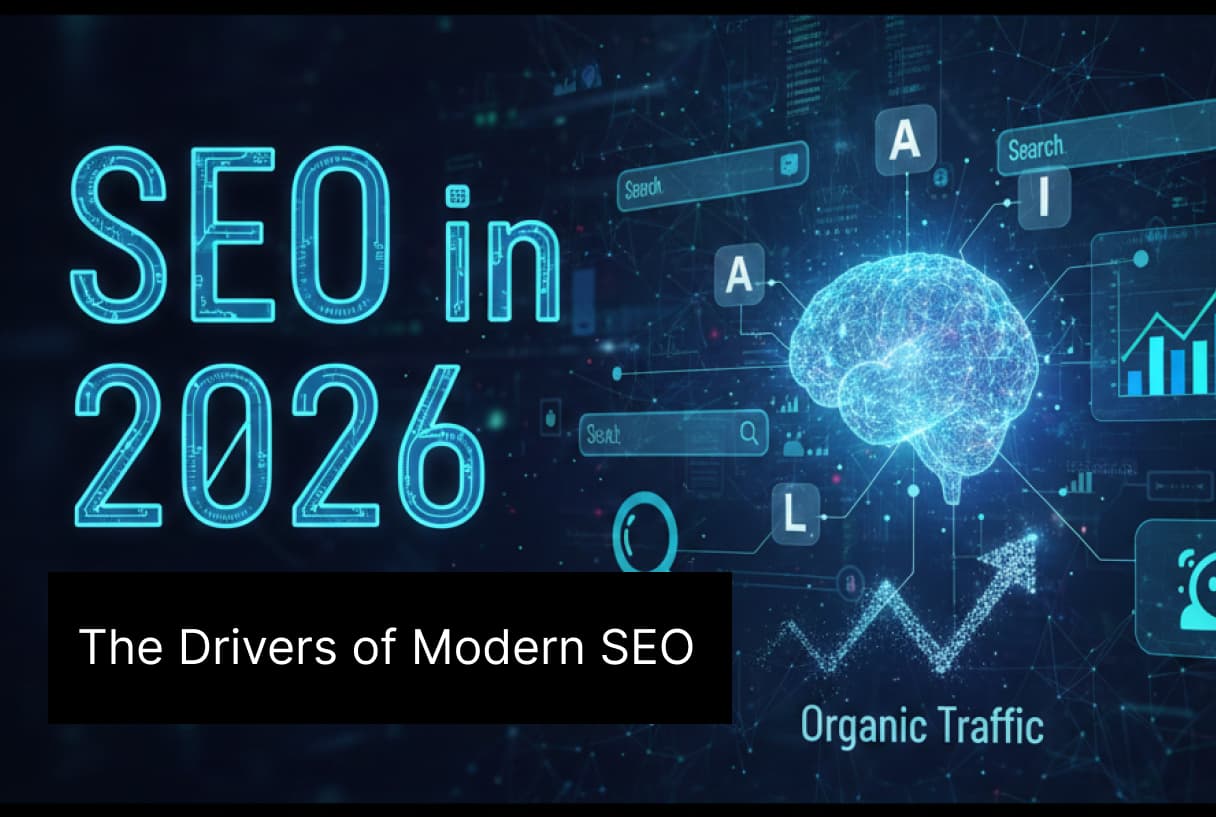
SEO in 2026 and the Drivers of Modern SEO
SEO in 2026: How AI Search and LLMs Are Reshaping Organic Traffic
The search ecosystem underwent a rapid transformation, especially last year. Traditional organic results are no longer the sole gateway to visibility, as Large Language Models (LLMs) and AI-powered search experiences fundamentally change how users discover information.
To succeed in 2026, brands must urgently adapt to the new forces shaping modern SEO, where visibility increasingly depends on how well content performs within AI-driven search environments.
The Surge of AI-Driven Searches
One of the most significant shifts in SEO is the rise of AI-driven search experiences, including:
Google AI Overviews
Dedicated AI chat systems (e.g., ChatGPT, Perplexity, among others)
Google’s AI Mode
These platforms synthesize answers directly within the search interface, often eliminating the need for users to click through to websites.
As a result, SEO is no longer just about rankings. It’s about becoming a trusted, citable source that AI systems reference when generating answers.
Key implication: Content must be structured, factual, and machine-readable to earn visibility in AI-generated responses.
The Erosion of Top-of-Funnel (ToFu) Traffic
A second major driver reshaping SEO is the decline of Top-of-Funnel traffic.
Modern SERPs are increasingly answer-rich, leading to a surge in zero-click searches. Recent studies suggest that up to 60% of searches now end without a click, especially for informational queries.
This shift has several consequences:
Fewer impressions are turning into visits
Lower click-through rates for publishers
Reduced ROI from legacy content strategies focused purely on awareness
In short, traditional ToFu SEO content is losing its ability to drive traffic even when it ranks well.
What AI Search Means for Your Brand
The impact on brands is both immediate and structural:
Declining organic traffic from informational keywords
Reduced visibility for content that once dominated early buyer journeys
Increased competition to appear in AI snippets and synthesized answers
Critically, brands that fail to adapt will see a decrease in the business value of traditional SEO, even if rankings appear stable.
The Dual Strategy to Win in AI Search
To remain competitive in the AI-driven search landscape, brands must adopt a dual SEO strategy:
1. Optimize for AI Visibility (Generative SEO)
This involves creating content specifically designed to be used by LLMs, including:
Clear definitions and concise explanations
Structured headings and schema markup
Fact-based, well-sourced content
Entity-focused optimization (people, brands, concepts)
The goal is to become a reliable source AI systems trust and cite.
2. Shift Traffic Strategy Beyond ToFu
Brands must rebalance their SEO efforts toward:
Mid- and bottom-funnel content
Use-case pages, comparisons, and original insights
Content that AI cannot easily summarize or replace
This ensures organic traffic remains commercially valuable even as informational clicks decline.
Final Thoughts
In 2026, SEO is no longer just about chasing blue links. It’s about earning relevance inside AI systems while focusing on content that drives measurable business outcomes.
Brands that embrace AI search optimization today will be the ones that remain visible tomorrow—both to users and to the machines answering their questions.